
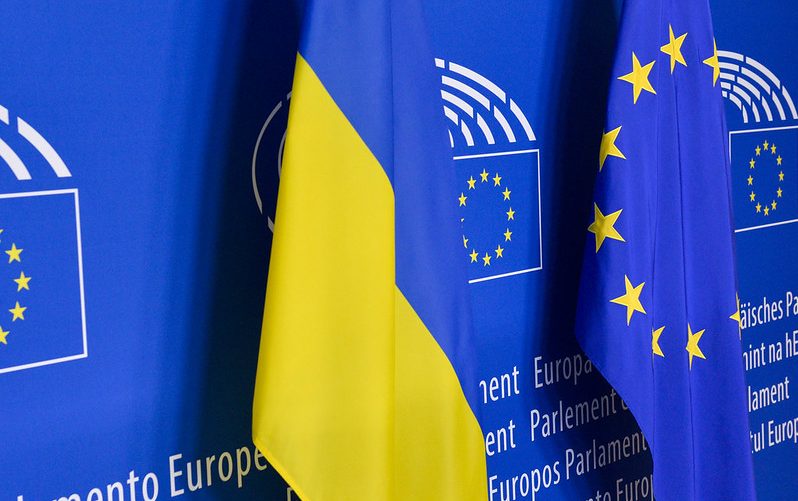
On Thursday, February 24, 2022, Russia launched an unprovoked attack on Ukraine in the early morning hours. The invasion came after weeks of the Unites States warning the world about an imminent threat due to Russia’s military build-up on the border to Ukraine and joint military exercises held with Belarus. Russia, of course, denied the claims.
Analysts, experts and those following the news now contemplate the reasons for this attack and bring forward different theories for Putin’s megalomaniac policy towards Ukraine and the world. In addition, discussions among the general public about the causes of the invasion and Russia’s reasons for the attack, also according to Russian propaganda, ensued. People now once again raise the question of guilt and blame the West for the crisis due to its policies towards Ukraine that allegedly provoked Putin.
In 2014, John J. Mearsheimer wrote an article in Foreign Affairs called “Why the Ukraine Crisis Is the West’s Fault”, raising the question of guilt for what had happened in 2014. In his piece, he talks about the “liberal delusions that provoked Putin” and questions “the prevailing wisdom in the West” that “the Ukraine crisis can be blamed almost entirely on Russian aggression”. In his piece from eight years ago, Mearsheimer also mentions the part of the Western argument that claims that Crimea was annexed in 2014 due to Putin’s “long-standing desire to resuscitate the Soviet empire” and that he would eventually target the whole of Ukraine and possibly other countries in eastern Europe – an account which Mearsheimer claimed to be wrong, but which is now once again revived among analysts around the world.
Instead, Mearsheimer argues that the West bears the majority of the responsibility for the crisis in Ukraine in 2014 – the crisis that was just a precursor to everything that followed in the years after and to what Ukrainians are experiencing now. It is the West’s fault, his argument goes, because of NATO’s eastern expansion into Russia’s backyard, by which Russia felt increasingly threatened, and because of the EU’s enlargement in the same geographical area as well as its support to pro-democracy movements in the region.
He then goes on to claim that realpolitik remains relevant and that, since the consequences of the West’s approach are now clear, “it would be an even greater mistake to continue this misbegotten policy” – essentially saying that the West should stop its support to and engagement with Ukraine.
This view of the West as the culprit is now being revived by some as the Russian invasion of Ukraine unfolds before the world’s eyes. Hence, one may argue that not only was the crisis in 2014 the West’s fault, but also the Russian aggression that we see these days in Ukraine.
However, this argument misses a crucial point: it is not the West’s fault because of NATO or EU expansion in Russia’s backyard – this can only be part of the explanation if at all.
Beyond Mearsheimer’s argument, the Russian aggression towards Ukraine is the West’s fault because we accommodated Putin and his behaviour for too long. And, because we have not shown him clearly enough in the past that his aggressive conduct and the violation of international law will have serious consequences. What is happening now may very much be due to our own negligence.
We were too negligent, after the Salisbury attack when he poisoned the former Russian agent, Sergei Skripal, and his daughter in the United Kingdom.
We were too negligent when he poisoned political opponents outside Russia and arrested dissidents.
We were too negligent when it was revealed that it was indeed a Russian missile that shot down MH17.
We were too negligent when he took Crimea.
We were too negligent when he backed separatists in eastern Ukraine and meddled in Ukrainian internal affairs.
And the list continues.
Instead of punishing Putin as we would if any other state behaved similarly, the West went on a difficult balancing act between, on the one hand, laying out red lines and raping Russia’s knuckles when it went too far; and on the other hand, furthering cooperation with Russia, such as deciding to build the Nord Stream II pipeline to receive natural gas from Russia. The West sanctioned Russia, always just enough to make a statement, but not pushing it too far. “We need to keep all channels of communications with Russia open”, is what one EU official told me in 2018 when asked why the EU is reluctant to impose harsher sanctions.
It took a full-scale invasion of Ukraine and over 15.000 deaths since 2014, for the West to finally decide to isolate Russia’s rogue regime: to suspend Nord Stream II, ban Russia from SWIFT, close airspace for Russian planes, impose further, harsher sanctions and finally also sanction high-ranking Russian government officials, such as Putin and Lavrov.
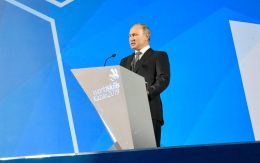
Perhaps, looking at past reactions from the West, Putin miscalculated because he did not expect to face any major consequences this time either.
Of course, we cannot say with certainty that Russia would not have attacked Ukraine if the West had shown more teeth in the past. But surely, it would have made the West look less hypocritical and more in line with its own principles. And perhaps, it would have demonstrated to Putin that the West can act in unity and will not accept further transgressions.
Lastly, I want to counter Mearsheimer’s final argument in his essay, namely, that the West should “work to create a prosperous but neutral Ukraine, one that does not threaten Russia and allows the West to repair its relations with Moscow.”
I disagree with the claim that a neutral Ukraine would be able to exist in the region. There can be no “neutral Ukraine” with Russia in its backyard because Putin denies Ukrainian statehood, questions its right to exist as a nation and sees it as an existential threat. It is, therefore, safe to assume that Putin would not stop his megalomaniac behaviour just because Ukraine declares itself neutral and vouches never to join NATO or any other military alliance. In addition, it would be a mistake to let Ukraine down in its ambition to become a prosperous, democratic nation, and to let it align itself with whomever it wants.
As the saying goes, past behaviour is the best predictor of future behaviour. Considering Putin’s past behaviour towards Ukraine and other parts of the EU’s eastern neighbourhood, for example, Georgia, we should acknowledge that Putin cannot be trusted, as he seemingly wants to revive the notion of a Russian empire.
Sources BBC (2022): Ukraine tensions: US trying to draw Russia into war, Putin says, https://www.bbc.co.uk/news/world-europe-60220702 Mearsheimer, J. (2014): Why the Ukraine Crisis Is the West’s Fault, Foreign Affairs, https://www.foreignaffairs.com/articles/russia-fsu/2014-08-18/why-ukraine-crisis-west-s-fault



Be First to Comment