
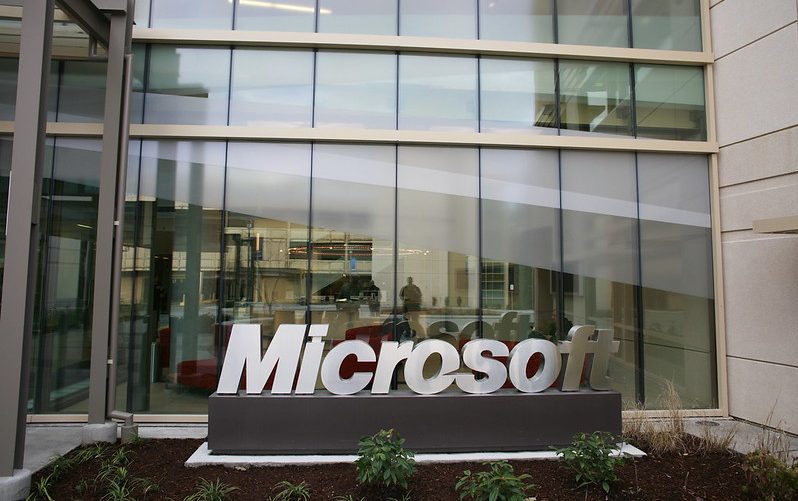
Earlier this year, Activision-Blizzard, developer and publisher of games such as World of Warcraft and Call of Duty, announced that Microsoft will incorporate them for about 70 billion dollars. This acquisition has enormous implications not just for the games industry but also for the average consumer.
Today, almost about 4.5 billion people have access to the internet, of which around 3 billion play video games. Over 1.5 billion of these users play on windows and at least 100 million on Xbox (Statista, 2021). What does this mean?
Imagine a world where the most popular free time activity is gaming. Imagine this activity has a market value of over 170 billion dollars (Mordor Intelligence, 2021). And, imagine that at least half of this activity takes place on systems run by Microsoft. However, this does not mean that Microsoft owns half of the gaming’s market value, yet. To actually claim its share, Microsoft would have not just to provide systems and platforms but also the actual games in which people spend countless hours.
Most people do not know that Microsoft began developing video games for computers already in 1979. The company, however, rose to actual fame in gaming after they published the Age of Empires series in the late 1990s and the release of the Xbox console in 2001.
Since then, Microsoft has been sustainably growing their portfolio of development studios, games and consoles. In 2017, the Xbox Game Pass was launched (for computer and console), which was a novel business model at that time in the games industry and an indication of Microsoft’s ambition to dominate future gaming. The game pass works technically like a Netflix subscription, where you pay a monthly fee to access a variety of content. Since then, this model has been copied by various other firms in gaming, such as EA and Epic Games. And shortly after Google surprisingly (and relatively unsuccessfully) entered the video game market with Stadia in 2019, Microsoft decided in 2020 to buy for 7.5 billion dollars Bethesda, a respected holding of studios that developed the Doom, Fallout and The Elder Scrolls franchise (BBC, 2020).
This is where we arrive at this year’s acquisition of Activision-Blizzard for almost 70 billion dollars (Peters, 2022). Disney bought LucasFilm for 4 billion dollars, just to give you a dimension. Activision-Blizzard owns the Call of Duty franchise (ca. 300 million active players), the battle.net platform including games such as World of Warcraft, Hearthstone and Diablo (ca. 25 million players), and Candy Crush saga (ca. 300 million active players) (Bevan, 2022; Statista 2022). This means that with Microsoft’s already existing portfolio, it is a step closer to not just providing platforms and services for games to half of all gamers on the globe, but also producing and owning all games provided on these platforms.
So, what’s Microsoft’s endgame here? Owning gaming? Owning your means to play? Maybe. But one thing is for sure. It’s a tech empire that is out there looking to expand indefinitely. Spectating this perplexing development of Microsoft swallowing up the industry’s biggest players like dots in a Pac-Man game while avoiding the powerless spectres of governmental antitrust organisations is troubling (Morrison, 2022). It does also make one think of a book called Games of Empire. In that book, the media scholars Dyer-Withford and de Peuter interrogate the interface of global capitalism and the games industry under the concept of “Empire”.
“Empire is governance by global capitalism. […] Empire is global in terms not only of its geographic reach but also of its social scope. Capital now taps its subjects’ energies at multiple points: not just as workers (as labor power) but also as consumers (the “mind share” targeted by marketers), as learners (university degrees as vocational preparation), and even as a source of raw materials (the bio- value extracted for genetic engineering). Empire is thus a regime of “biopower”— a concept borrowed from the philosopher Michel Foucault (1990, 135–45)— exploiting social life in its entirety. (2009, p.xx)”
Regarding the recent development, it’s worth asking whether we should just accept that Microsoft is about to build the greatest Empire of entertainment and immaterial labour on the planet. On the other hand, maybe I am just too critical of the possibility of being alive to see how working, playing, socialising and being exploited is about to merge into a form of virtual collective activity that is fun.
In any case, we should start wondering what it means to live in times where no government on the earth has the power to interrupt business deals a la Rockefeller that have the ability to corrupt the free market and our choice to have alternatives as consumers and players.
Sources BBC. (2020, September 21). Microsoft buys Fallout creator Bethesda for $7.5bn. Retrieved February 20, 2022, from BBC: https://www.bbc.com/news/54233235 Bevan, J. (2022, January 10). Candy Crush Saga Revenue and Usage Statistics (2022). Retrieved February 20, 2022, from Mobile Marketing Reads: https://www.mobilemarketingreads.com/candy-crush-saga-revenue-and-usage-statistics-2020/ Dyer-Withford, N., & de Peuter, G. (2009). Games of Empire Global Capitalism and Video Games . Minneapolis: University of Minnesota Press. Microsoft. (2022). By the Numbers. Retrieved February 20, 2022, from Microsoft: https://news.microsoft.com/bythenumbers/en/windowsdevices Mordor Intelligence. (2021). GAMING MARKET – GROWTH, TRENDS, COVID-19 IMPACT, AND FORECAST (2022 – 2027). Retrieved February 20, 2022, from Mordor Intelligence: https://www.mordorintelligence.com/industry-reports/global-gaming-market Morrison, S. (2022, January 27). Microsoft avoided the latest round of Big Tech antitrust scrutiny. Then it bought a company for $69 billion. Retrieved February 20, 2022, from Vox: https://www.vox.com/recode/22893117/microsoft-activision-antitrust-big-tech Peters, J. (2022, February 18). Read exactly how Microsoft’s $68.7 billion deal for Activision Blizzard came together. Retrieved February 20, 2022, from The Verge: https://www.theverge.com/22941636/microsoft-activision-blizzard-acquisition-sec-filing-came-together Statista. (2021, September 10). Global digital population as of January 2021. Retrieved February 20, 2022, from Statista: https://www.statista.com/statistics/617136/digital-population-worldwide/ Statista. (2021, June 1). Number of active video gamers worldwide from 2015 to 2023. Retrieved February 20, 2022, from Statista: https://www.statista.com/statistics/748044/number-video-gamers-world/ Statista. (2021, February 4). Number of monthly active users (MAU) of Blizzard Entertainment worldwide from 1st quarter 2018 to 4th quarter 2021. Retrieved February 15, 2022, from Statista: https://www.statista.com/statistics/1234255/blizzard-quarterly-mau/ Statista. (2021, December 9). Number of monthly active users (MAU) of Microsoft Xbox Live from fiscal January 2016 to December 2020. Retrieved from Statista: https://www.statista.com/statistics/531063/xbox-live-mau-number/#:~:text=Number%20of%20Xbox%20Live%20MAU%202020&text=As%20of%20December%202020%2C%20Microsoft’s,at%20the%20beginning%20of%202016. Statista. (2022, February 15). Global Call of Duty franchise audience reach in 2018 and 2020. Retrieved February 20, 2022, from Statista: https://www.statista.com/statistics/1243293/cod-annual-players/




Be First to Comment