
It is a very tough time for British politics given the transformation its identity politics is bound to undergo – first, as a result of Brexit and secondly, as a result of the death of Queen Elizabeth II, is a vital focus for England both locally and internationally. Let us look through the political reality of Great Britain throughout these past three years.
Boris Johnson
Starting with Boris Johnson: Despite the popularity that he currently enjoys in northern Europe for his exemplary support of the Ukrainian people, he has never been popular in British political circles. For example, the influential writer Sonia Parnell has characterized Johnson’s politics as “an ideological emptiness beneath the staunch Tory exterior”, after which she continues that his political visions are imbued with overly pragmatic elements.
In addition, the “partygate” scandal, his flagrant violation of strict regulations set by his own government during one of the most challenging periods of the Covid-crisis, has not yet been forgotten. In fact, it is likely that, due to the war in Ukraine and the uncertainty unleashed by it, he was able to keep his position in government for a year and a half. However, he still had to resign in the end.
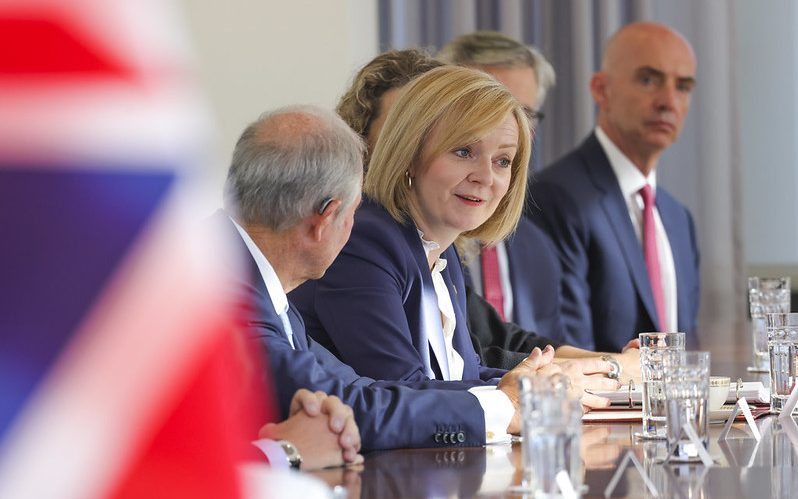
Who is Liz Truss, and what does she represent?
A politician with libertarian preferences, Truss, Britain’s new prime minister, is a classic “war hawk” whose foreign policy strategy consists of clear, controversial statements. For example, she called on Britain to reduce its economic dependence on China and Russia, and supported the British government’s diplomatic and economic sanctions against China, including banning the Chinese ambassador to the UK, Zhen Zeguang, from entering Parliament in response to China’s sanctions on Xinjiang, and accused Rishi Sunak, former Chief Secretary to the Treasury of “seeking close economic relations” with China. Truss is also known as an active supporter of Taiwan’s political sovereignty and acknowledges China’s ethnic genocide of the Uyghurs.
Is it possible to agree with the above-mentioned facts? Of course, however, the country’s prime minister has to be extremely careful with their words, especially when the UK is currently facing the following six main challenges:
Rising inflation
Inflation currently exceeds the 10 percent mark, and the Bank of England predicts it will reach 13 percent in the coming months. As a result of the Queen’s death, this forecast will naturally worsen as the need to print currency in a modified form arises (her face is on British money).
The war in Ukraine
Boris Johnson’s fiscal donations to the embattled country brought him widespread fame. How will Liz Truss approach the conflict when its resolution is not yet visible? Will she help a partnering country without harming her own? These questions currently remain unanswered.
Conflict of interest with China
Despite Truss’s arguments for reducing economic dependence on China, any reduction in trade with China would likely put further pressure on the British economy. Therefore, the new PM finds itself between a rock and a hard place when it comes to her attitude towards China.
The healthcare crisis
According to Jeremey Hunt, former health minister of Great Britain, the current healthcare staffing crisis is the worst one they have ever faced and combined with an even more stressful waiting list for the patients, it is considered to be one of the most difficult challenges for Liz Truss currently.
Disagreements in her own party
Her own political party is rebelling against her, one-third of which did not even support Truss going to the second round of the elections.
Challenges with Western partners
Lastly, a bad attitude towards the new prime minister from key Western partners, including French President Emmanuel Macron and Joe Biden’s administration, the latter of which is critical of Liz Truss’ position regarding the Northern Ireland Protocol, is undermining her position as leader of the country.
Conclusion
To summarize, Liz Truss must learn the language of diplomacy because from now on, she will have to speak on behalf of her people, voicing their positions in the international arena, meaning her and British citizens’ views must start to align in a more sophisticated manner.
As mentioned above, Queen Elizabeth II is not just a fictitious monarch – she was closely related to the identity politics of the United Kingdom: she has gone through 15 prime ministers and six armed conflicts and is considered a symbol of modern Britain.
Queen Elizabeth II was the first female royal to serve in the Second World War, the princess who never left Buckingham Palace during a single attack on London, the monarch who completely modernized the constitutional monarchy and put the royal family at the service of the people: the British people were not intimidated by a weak prime minister as long as they were supported by the Queen.
Her death marks the end of an era. What remains is the hope that the United Kingdom, as one of the most vital actors in the West, will continue to correctly influence the current political climate, despite its own crisis.


Be First to Comment