
Bruce Springsteen is one of the greatest songwriters and performers in American musical history. His lyrics are full of simultaneous hope and despair, reflecting the changing and evolving social fabric of the United States resulting in a sound that resonates with hundreds of millions of Americans coming from all faiths, socioeconomic, racial, age, and ethnic backgrounds. While many Americans have misunderstood Springsteen’s politics through his 1984 single “Born in the U.S.A.”, mistaking him for being a symbol of Reagan-era politics and staunchly Conservatively patriotic, his politics are far more Progressive and Liberally focused.
Much of his music reflects these political views, though most prominently in his later work, from the 1990s to the late 2010s. One of his lesser-known works is the 1997 single titled “41 Shots (American Skin)”. The lyrics of the song are available below;
(41 shots)
(41 shots)
(41 shots)
(41 shots)
41 shots, and we’ll take that ride
‘Cross the bloody river to the other side
41 shots, cut through the night
You’re kneeling over his body in the vestibule
Praying for his life
Is it a gun, is it a knife
Is it a wallet, this is your life
It ain’t no secret (it ain’t no secret)
It ain’t no secret (it ain’t no secret)
No secret my friend
You can get killed just for living in your American skin
(41 shots)
(41 shots)
(41 shots)
(41 shots)
41 shots, Lena gets her son ready for school
She says, “On these streets, Charles
You’ve got to understand the rules
If an officer stops you, promise me you’ll always be polite
And that you’ll never ever run away
Promise Mama you’ll keep your hands in sight”
Is it a gun (is it a gun), is it a knife (is it a knife)
Is it a wallet (is it a wallet), this is your life (this is your life)
It ain’t no secret (it ain’t no secret)
It ain’t no secret (it ain’t no secret)
No secret my friend
You can get killed just for living in your American skin
(41 shots)
(41 shots)
(41 shots)
(41 shots)
Is it a gun (is it a gun), is it a knife (is it a knife)
Is it in your heart (is it in your heart), is it in your eyes (is it in your eyes)
It ain’t no secret (it ain’t no secret)
It ain’t no secret (it ain’t no secret)
It ain’t no secret (it ain’t no secret)
41 shots, and we’ll take that ride
‘Cross this bloody river to the other side
41 shots, I got my boots caked with this mud
We’re baptized in these waters (baptized in these waters)
And in each other’s blood (and in each other’s blood)
Is it a gun (is it a gun), is it a knife (is it a knife)
Is it a wallet (is it a wallet), this is your life (this is your life)
It ain’t no secret (it ain’t no secret)
It ain’t no secret (it ain’t no secret)
No secret my friend
You can get killed just for living in
You can get killed just for living in
You can get killed just for living in your American skin
41 shots
41 shots
41 shots
41 shots
41 shots
41 shots
41 shots
41 shots
41 shots (you can get killed just for living in)
41 shots (you can get killed just for living in)
41 shots (you can get killed just for living in)
41 shots (you can get killed just for living in)
41 shots (you can get killed just for living in)
41 shots (you can get killed just for living in)
41 shots (you can get killed just for living in)
41 shots (you can get killed just for living in)
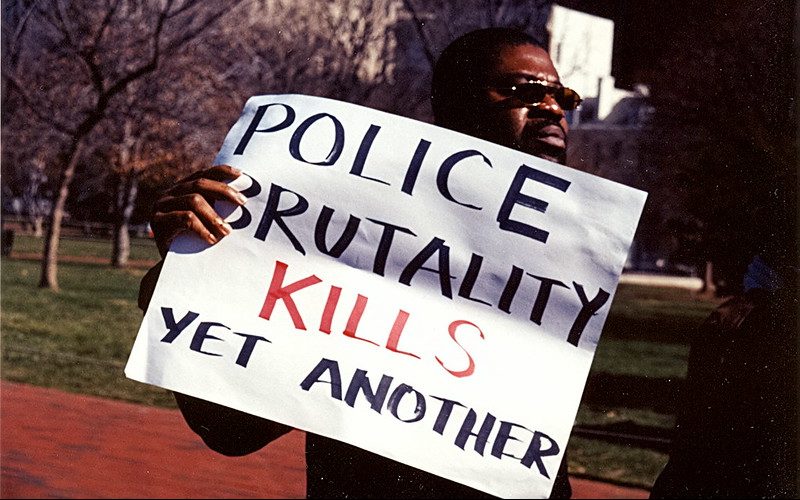
The single is a clear and strong commentary on police violence and the African-American experience with criminal justice in the United States. Furthermore, the song is heavily inspired by an actual shooting of a Black man by American law enforcement.
The Killing of Amadou Diallou
In the early morning hours of 04 February 1999, Guinean immigrant to the United States Amadou Diallo was standing outside of his apartment building when “four plainclothes police officers drove up [in an unmarked police car of the Street Crime Unit] … patrolling the street looking for a suspect in a series of rapes in the Bronx [even though] the last rape had been nine months earlier”. After a short discussion in which officers ordered Diallo to put his hands up, Diallo moved towards the door and reached into his pocket; Officers fired a total of 41 shots at Diallo, with nineteen rounds hitting the immigrant.
Police said they believed Diallo had a gun, yet it was later confirmed he was reaching for his wallet. While an internal investigation found the officers acted in accordance with policy, the four policemen were charged with murder a month later. During the trial, one officer testified that Diallo looked similar in appearance to a rapist from “last year” but also admitted under cross-examination “that he could not see Mr. Diallo well enough even to determine his race” nor “never considered that Mr. Diallo might have had a legitimate reason for being where he was, or that he might have lived in the building”. Other eyewitness accounts were inconsistent across the board meaning “the jury had to depend largely on the officers themselves for an account of precisely what happened in the moments that led up to the shooting and the shooting itself”. In the end, the racially diverse jury elected to acquit the white officers on all charges.
The case galvanized a large section of New York and resulted in serious questions being raised about police operations, the state of race, and criminal justice as a whole. The Street Crime Unit, an elite unit of the New York City Police Department (NYPD) developed in the 1970s to “patrol areas [with] high crime rates” was disbanded in 2002 after a “federal investigation discovered findings of racial profiling”. Many politicians commented on the case and what it meant for criminal justice in the United States as a whole with President Bill Clinton saying it best “I don’t pretend for a moment to second-guess the jury. But I know most people in America of all races believe that if it had been a young white man in an all-white neighborhood, it probably wouldn’t have happened”.

Why “American Skin” Remains an Important Song for Americans Today
This case, while gaining minimal attention from the public outside of New York and interesting largely only those invested in criminal justice, law enforcement, or race in the United States, has become an all-too-familiar occurrence in America. And like with this case, American Skin (41 Shots), though dated, remains a highly important song in the discussion of race and justice still today.
The song accurately describes the Diallo shooting but also goes a step further in commenting on how persons (almost exclusively minorities) are to act when approached by the police. The following lyrics
If an officer stops you, promise me you’ll always be polite
And that you’ll never ever run away
Promise Mama you’ll keep your hands in sight
serve as a stark reminder and reality for many minorities today.
Minorities in large part are unable to act how other races (namely White) act when in the presence of police officers on official business. This disparity points to the issues that America has in relation to race, gender, and ethnicity. It should not be the norm that a minority interacts differently with law enforcement than other races, genders, creeds, or ethnicities. The solution to this issue is multiple: enhanced bias awareness and de-escalation training, the inclusion of officers of various ethnicities and races, and hiring on a whole-person concept as opposed to prior military or law enforcement experience (simultaneously promoting the hiring of those with strong ethics and a sense of morality).
These are only a few recommendations, predominantly touching on training and retention, which will only work to solve a minor amount of the disparity between racial interactions with law enforcement.
In addition to strongly touching on the reality of minorities and how they interact with the police, Springsteen’s single also indicates commentates on the difficulty officers have in discussing with suspects and civilians as well as determining when and when to not use force. This lyric:
Is it a gun (is it a gun), is it a knife (is it a knife)
Is it a wallet (is it a wallet), this is your life (this is your life)
serves effectively in both reminding officers that they must be sure of their suspect or everyday civilian’s actions before turning to deadly force.
Springsteen’s single still rings very true for many Americans, especially minorities. It reflects the reality of many minorities’ experiences in official interactions with law enforcement, the fear and worry they have they may end up in prison or dead at the hands of a police officer due to a bias, either conscious or subconscious. This work of music as well describes the harsh and bitter reality of civilians in the United States and urges police to always be sure of the situation before resorting to deadly force.
This single serves as an important reminder for all Americans to continue our work towards human and civil rights justice and reforming law enforcement so all persons are treated justly and not in a racially biased or offensive way.





Be First to Comment