
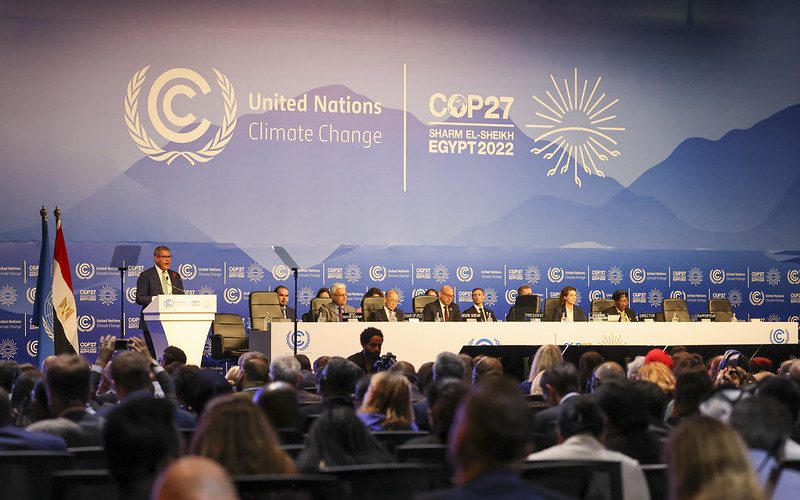
The 27th session of the Conference of the Parties to the UNFCCC, also known as COP27, is taking place from 6th-18th November in Egypt, with an expected 100 Heads of State in attendance alongside heads of multinational corporations, civil society leaders and organizations, climate researchers and scientists, and more. This annual conference intends to bring countries together with the aim of collectively tackling the climate crisis, which set new records of devastation this year. Although several expectations have been set every year, countries have failed to effectively adhere to them. This year’s COP27 might be the most controversial yet, and perhaps the most unsuccessful, for a plethora of reasons.
The boycott of COP27 by Greta Thunberg made headlines, who accused the conference of greenwashing and of allowing limited space for civil society in the discussion. She accused world leaders of merely attending the event for attention, and the event being held in Egypt is criticism worthy as they detain activists and dissidents (violating SDGs.) While Thunberg is right in her reasons, the UN Climate Change Conference is the ultimate chance the world has to mobilize world leaders and people of power to commit to the fight against climate change.
This year’s COP27 will, for the first time, introduce the topic of Climate Compensation for poorer countries experiencing climate disasters. If successful, this is monumental for countries in the global South as they will receive more resources to survive the effects of climate change (e.g. install renewable energy, construct stronger infrastructures, and provide adequate education and healthcare facilities).
Throughout different COPs, the conference has faced several difficulties in gathering states to cooperate. It is daunting to secure different countries with different aims to align their interests to work on a common agenda. For instance, while the likes of Sweden and Singapore may be interested in switching to renewable energy and electric cars, the Gulf states may not be so keen as their economy relies heavily on petroleum and gas. This is a major obstacle in addressing climate change and in making any progress at the summit.
The global rise of right-wing leaders will also stump any progress engendered from past conferences. Similar to Trump’s withdrawal from the Paris Climate Accords, we might hear similar stories coming out of countries ruled by conservatives and climate change deniers. Environmental protection laws will also erode, risking further carnage of natural resources. For instance, under Bolsonaro’s presidency in Brazil, over 1,500 fires were accounted in the Amazon rainforest every day as a result of mass deforestation for commercial uses, with NGOs suggesting a Bolsonaro win in the 2022 general elections could annihilate the ‘lungs of the earth’. Fortunately, Lula, Bolsonaro’s opposition, won the presidential election this month. Nonetheless, other states may not be as propitious with their elections as Brazil.
As more updates are being reported about the agenda of COP27, this year’s conference might be a stepping stone towards environmental progress. Hopefully, with rising pressure from younger generations (and the environment), important actors will genuinely act upon this global emergency. As the past has shown, if we all collectively work together, we could patch up the climate the way we have the ozone layer, but only with everyone doing their part, some more than others.
Sources Amazon Conservation (2021) 1,500 Major Fires Across the Amazon, But What’s Behind the Burning [online] available from <https://www.amazonconservation.org/1000-major-fires-across-the-amazon-but-whats-behind-the-burning/> Dickie, G. & Abnett, K. (2022) ‘COP27 kicks off with deal to discuss climate compensation’, Reuters [online] available from <https://www.reuters.com/business/cop/cop27-summit-begin-with-plea-discuss-climate-compensation-2022-11-06/> The Guardian (2022) Greta Thunberg to skip ‘greenwashing’ COP27 climate summit in Egypt [online] available from <https://www.theguardian.com/environment/2022/oct/31/greta-thunberg-to-skip-greenwashing-cop27-climate-summit-in-egypt>






Be First to Comment