
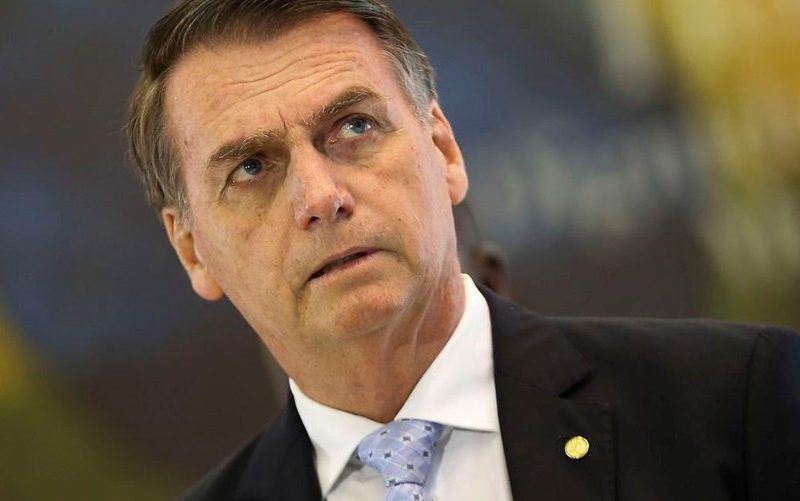
Brazilian President Jair Bolsonaro has been nominated the 2020 Corrupt Person of the Year, by the Crime and Corruption Reporting Project (OCCPR). However, much as his administration is full of controversies, to regard Bolsonaro’s government as such is a hasty conclusion. Brazil has indeed been marked by one of the largest public-private partnership corruption schemes in the world. In 2014, in response to the scandal, justice authorities took action by launching the “Car Wash” operation, an anti-corruption and -money laundering initiative which led to a series of investigations that has so far resulted in 215 convictions of prominent figures of the political and economic sector, as well as the recovery of record values to the public coffers. Even so, the Brazilian public sector is still perceived as severely corrupt. Nonetheless, questions remain whether Bolsonaro has been contributing to this perception. I hold the position that his nomination for the corrupt person of the year was unsubstantiated.
The media entity that created the ranking, which is conducted since 2012, states that the 2020 nomination for the infamous award was very tight among the judges, and they acknowledge that the pick was dubious. For the sake of clarity, the intention here is to convey a nonpartisan view, and so it does not aim at endorsing the Bolsonaro administration. For one thing, it is safe to say that he does employ a populist approach in appealing to the general public, especially those belonging to what could be considered the right-wing electorate. Apparently, he is quite successful in employing a rhetoric and methods of communication featured by populism, an ideology that precedes any other stance he claims to have. For another thing, Bolsonaro has constantly generated fuss over media outlets in attacking and attempting to delegitimize those he believes are sources of “fake news,” which in turn engenders more misinformation being disseminated by his supporters as he instigates them to share false information.
Overall, Bolsonaro’s actions and discourse have been very detrimental to Brazil. Not to mention he has completely mismanaged the COVID-19 crisis, which becomes worse when coupled with his imprudent and denialist stance on the pandemic. Yet, there are sufficient reasons to be sure that, for instance, Turkey’s Erdogan was a better nominee. Other prominent figures like Belarus’ Lukashenko and China’s Xi Jinping were not even included in the candidates list. Given the vast media coverage and investigations of these political actors throughout 2020, the controversies associated with them are compelling enough to justify that the 2020 pick was contradictory.
Turkey’s political institutions are now seen as a “pure dictatorship” and its electoral system as a deeply corrupted apparatus. Ever since the transformation of the Turkish government system—which was designed and led by President Recep Erdogan himself—citizens’ rights have been dramatically suppressed. In particular, the purge of numerous journalists and media outlets have been detrimental to democracy, hence compromising the freedom of speech. Additionally, it is estimated that more than 130,000 military, police, civil service and academia workers were discharged in response to a failed coup d’état on the grounds that they were enemies of the state. Overall, the political power is concentrated in the hands of a president who has utterly undermined Turkey’s democratic institutions and oppressed any form and expression of dissent at will.
Chinese President Xi Jinping, the leader of the country featured by a one-party, autocratic system, has systematically and premeditatedly put potential opponents to silence and suppressed the activities of media agencies and human rights actors. In more recent years, it became more evident to the international community that the Chinese Communist Party (CCP) has been violating the rights of religious groups by detaining more than a million Muslims, largely those of Uighur ethnicity, in “reeducation” camps located in the region of Xinjiang. In 2020, China possibly made the headlines daily, and its global image became gloomier because of its administration’s poor handling of the COVID-19 outbreak. With regards to Hong Kong, the CCP has proved to have its tentacles on a political and justice system that was supposed to be autonomous. Through the national security law, China’s control has already materialized in the arrest of 53 pro-democracy activists and former members of the opposition over accusations of a potential plot to take control of the local legislature.
Last but not least we have the authoritarian and long-ruling president of Belarus, Alexander Lukashenko, popularly referred to as “Europe’s last dictator.” In 2020, the world witnessed the deep feeling of discontent of Belarussians over the national government’s illegitimate crackdowns on the opposition candidates. This widespread popular unrest culminated in massive pro-democracy protests with citizens demanding Lukashenko’s resignation after what many regarded as a fraudulent election. The press is widely controlled by the state, so freedom of speech and expression are restricted, as well as the dissemination of information and freedom of association. Many journalists were detained while making their coverage of the protests, and even two presidential candidates were previously impeded from running and sent to jail.

Bolsonaro is said to have “surrounded himself with corrupt figures, used propaganda to promote his populist agenda, undermined the justice system, and waged a destructive war against the Amazon region.” To a certain degree, all that could be said to be true; nevertheless, I do not see why those are considered corrupt deeds rather than mere misgovernment, lack of competence, and opportunism. Also, the inconsistency is particularly noted in the wording: “is being investigated,” “allegedly ran a corruption racket,” “accused […],” and “tried to undermine.” Therefore, they are only presumptive sentences.
Without a doubt, any of the nominees above could have easily been placed on the top of the list. As consolidated autocrats -different from the case of Brazil – they have become corrupt catalysts of their own. The controversies regarding the Amazon, the attempts of improper interference in law enforcement, and the mismanagement and downplaying of the COVID-19 crisis do not make President Jair Bolsonaro corrupt. There is no concrete evidence or ruling that ultimately indicates that he has carried out such acts or is involved in corruption scandals – at least not for the time being. Accusations, allegations, and investigations are legitimate and should be taken into account. However, thus far, all of that is merely speculative.
Sources
Center for Strategic and International Studies, 2018. Erdogan Takes Total Control of “New Turkey” [online] Available at: https://www.csis.org/analysis/erdogan-takes-total-control-new-turkey [Accessed 06 January 2021]
Committee to Protect Journalists (CPJ), 2016. CPJ testifies on Turkey’s press freedom record after failed coup attempt [online] Available at: https://cpj.org/2016/09/cpj-testifies-on-turkeys-press-freedom-record-afte/ [Accessed 06 January 2021]
Council on Foreign Relations, 2020. Belarus in Crisis [online] Available at: https://www.cfr.org/event/belarus-crisis [Accessed 07 January 2021]
Council on Foreign Relations, 2020. China’s Repression of Uighurs in Xinjian [online] Available at: https://www.cfr.org/backgrounder/chinas-repression-uighurs-xinjiang [Accessed 06 January 2021]
Council on Foreign Relations, 2020. The Chinese Communist Party [online] Available at: https://www.cfr.org/backgrounder/chinese-communist-party [Accessed 06 January 2021]
Folha de S. Paulo, 2020. Avaliação de Bolsonaro se mantém no melhor nível, mostra Datafolha [online] https://www1.folha.uol.com.br/poder/2020/12/avaliacao-de-bolsonaro-se-mantem-no-melhor-nivel-mostra-datafolha.shtml [Accessed 06 January 2021]
Harvard Kennedy School – Misinformation Review, 2020. Using Misinformation as a political weapon: COVID-19 and Bolsonaro in Brazil [online] https://misinforeview.hks.harvard.edu/article/using-misinformation-as-a-political-weapon-covid-19-and-bolsonaro-in-brazil/ [Accessed 05 January 2021]
Istituto per gli Studi di Politica Internazionale (ISPI), 2019. Elezioni in Turchia: a Istanbul tutto da rifare [online] Available at: https://www.ispionline.it/it/pubblicazione/elezioni-turchia-istanbul-tutto-da-rifare-23030 [Accessed 06 January 2021]
Ministério Público Federal (MPF), 2020. Caso Lava Jato – Entenda o Caso [online] Available at: http://www.mpf.mp.br/grandes-casos/lava-jato/entenda-o-caso [Accessed 05 January 2021]
Ministério Público Federal (MPF), 2020. Caso Lava Jato – Resultados [online] Available at: http://www.mpf.mp.br/grandes-casos/lava-jato/resultados [Accessed 05 January 2021]
National Public Radio (NPR), 2018. Turkey’s State Of Emergency Ends, While Erdogan’s Power Grows And ‘Purge’ Continues [online] Available at: https://www.npr.org/2018/07/26/632307755/turkeys-state-of-emergency-ends-while-erdogans-power-grows-and-purge-continues?t=1534676536454 [Accessed 06 January 2021]
Organized Crime and Corruption Reporting Project (OCCRP), 2020. 2020 Person of the Year in Organized Crime and Corruption [online] Available at: https://www.occrp.org/en/poy/2020/ [Accessed 05 January 2021]
Pew Research Center, 2020. Unfavorable Views of China Reach Historic Highs in Many Countries [online] Available at: https://www.pewresearch.org/global/2020/10/06/unfavorable-views-of-china-reach-historic-highs-in-many-countries/ [Accessed 06 January 2021]
Radio Free Europe – Radio Liberty, 2020. Journalists Detained Near KGB Building In Minsk Amid Crackdown On Press [online] Available at: https://www.rferl.org/a/belarus-journalists-detained-kgb-minsk-press-crackdown/30753837.html [Accessed 07 January 2021]
Reporters Without Borders (RSF), 2020. How Brazil’s media resist “Bolsonaro system” harassment [online] Available at: https://rsf.org/en/reports/how-brazils-media-resist-bolsonaro-system-harassment [Accessed 05 January 2021]
SAGE, 2020. Populism as Parody: The Visual Self-Presentation of Jair Bolsonaro on Instagram [online] Available at: https://journals.sagepub.com/doi/pdf/10.1177/1940161220970118 [Accessed 05 January 2021]
South China Morning Post, 2020. Hong Kong national security law: 53 former opposition lawmakers, activists arrested; authorities accuse them of plot to ‘overthrow’ government [online] Available at: https://www.scmp.com/news/hong-kong/law-and-crime/article/3116573/dozens-hong-kong-opposition-lawmakers-activists [Accessed 06 January 2021]
The Washington Post, 2020. Can people power topple Europe’s ‘last dictator’? [online] Available at: https://www.washingtonpost.com/world/2020/08/24/belarus-protests-lukashenko/ [Accessed 07 January 2021]
Transparency International, 2019. Corruption Perception Index 2019 [online] Available at: https://images.transparencycdn.org/images/2019_CPI_Report_EN_200331_141425.pdf [Accessed 05 January 2021]




Be First to Comment