
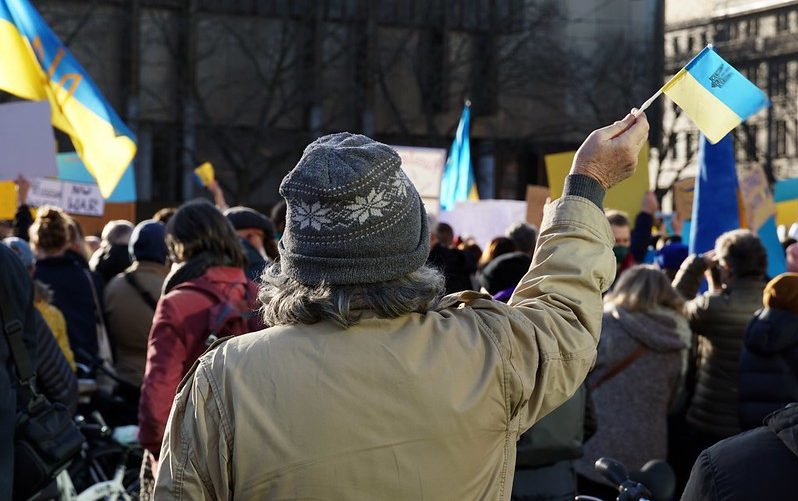
Ukraine
As we entered the eighth week of the Russian war on Ukraine, Russia, after it failed to capture Kyiv and hence withdrew from its outskirts, started its awaited offensive in the eastern region of Ukraine, Donbas. According to a Russian general, the aim is to seize all of southern and eastern Ukraine.
On Tuesday, a Ukrainian commander from Mariupol, the southern-eastern port city still under siege, released a video stating that they will not lay down their weapons and surrender. However, he also said they were outnumbered by Russian forces and did not know how long they could hold the city. He also called for humanitarian corridors to evacuate women and children who are still sheltering in the city that became notorious for the news of the population facing a humanitarian crisis, being cut off from water and electricity due to the Russian siege.
Finland
Following the Russian invasion of Ukraine, Finland, which shares a 1,340 km long border with the Russian Federation, is now seriously considering giving up its long-standing tradition of neutrality in return for a NATO membership.
As of April 2022, more than 60% of its population are in favour of joining the military alliance, despite Russian threats about “serious political and military consequences”, also including “retaliatory measures”, in case Finland were to join NATO.
Together with Finland, also neutral Sweden contemplates joining the military alliance and is now facing the same threats from Russia.
France
After the first round of the French presidential election, Emmanuel Macron and his opponent, populist far-right candidate Marine Le Pen, came forward as finalists. The second round will be held on April 24, 2022.
Want to know more about the first round of France’s presidential election? See Politico’s five takeaways here.
On Wednesday, April 20th, Le Pen and Macron had a final televised debate ahead of Sunday’s election. During the discussion, Macron accused Le Pen of being in the pocket of Russia, alluding to her close relationship with Putin.
Although polling suggests a second presidential term for Macron, the result is expected to be closer than five years ago: Yet, while a Le Pen success in the elections is unlikely, it is still not impossible. In the (unlikely) event of a Le Pen victory, her presidency would be another stress test for the European Union, among other stressors, such as the war in Ukraine, the rule of law breaches of Hungary’s newly re-elected prime minister Viktor Orbán and his various quarrels with Brussels.
As election day comes around, all signs point toward a Macron victory. He would be the first president in decades to win a second consecutive term.
In other news
Shanghai Lockdown: In an effort to stop another wave of Covid, Chinese authorities impose extreme measures on the population in Shanghai.
Turkey launched a new offensive against Kurdish fighters of the PKK in Iraq on Monday.
On Wednesday, Russia test-launched a new intercontinental missile, which the West perceived as a warning.
That’s it for this week! Thank you for reading, and we hope you enjoyed this newsletter.


Be First to Comment