
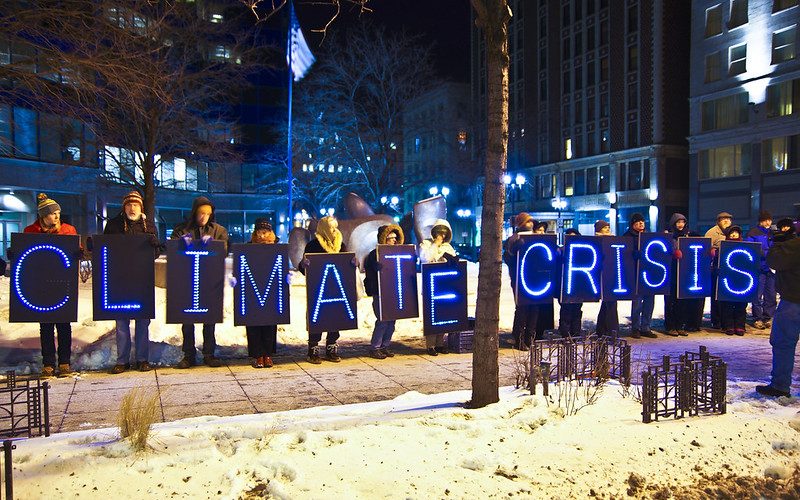
The scale of the threat directly diminishing biodiversity and causing climate crisis is much greater than what it is currently believed to be. An incisive report published recently in Frontiers in Conservation Science by 17 world-leading scientists paint a harrowing picture of what awaits civilization if immediate action is not taken. According to the study, which is sounding a loud alarm, even the informed population has underestimated the imminence of a ghastly future of mass extinction and climate disruption. The scientists point out that moderate goals set by governing entities to mitigate rising threats in the recent past have fallen short of achieving them. Evidence-based literature proposing ways to change human behaviour for the benefit of all surviving life are abundantly available. But the urgency and method required to implement these changes still appear to get drawn out or have not fully registered within the masses. The contents of the report is supported by data from more than 150 studies detailing the world’s major environmental challenges.
Human population growth and the associated production necessities to support that growth has unnaturally affected changes in the biosphere. The biosphere is made up of the parts of the earth where life exists—all ecosystems. The biosphere extends from the deepest root systems of trees, to the dark environments of ocean trenches, to lush rainforests, high mountaintops, and transition zones where ocean and terrestrial ecosystems meet. The biomass of terrestrial vegetation has been reduced to half of what it was at the beginning of agriculture recorded around 9000 BC. Biomass refers to the mass of living organisms, including plants, animals, and microorganisms. Human endeavours have consumed >70% of the Earth’s land surface. As a consequence, >10% of an estimated 7–10 million species on the planet are facing extinction in the near future. Furthermore, the inexorable decline of freshwater and marine environments to <15% of what was available 300 years ago is an indisputable catastrophe.
The ecosystem, which is served and sustained by biodiversity, also suffers enormously as a result of the rapid loss of biodiversity. Repercussions have been evidenced in reduced pollination, reduced carbon sequestration, soil degradation, poorer water and air quality, drought, deforestation, land degradation and compromised human health. The total manufactured yield for human consumption has exceeded the sum of all living biomass on earth as of 2020!
A loss of ~75% of all species on the planet over a short geological time period is characterised as a mass extinction. Generally, this happens over a time interval of <3 million years. The most recent mass extinction occurred 66 million years ago, which was the last of 5 recorded in history. The extinction rate since the last occurrence has been 0.1 extinctions per million species per year until recently. Current extinction rate estimates have soared to orders of magnitude higher and the planet is irrefutably on course for a sixth major extinction.
The global population is expected to grow to ~9.9 billion by the year 2050. Apart from the biodiversity loss and the debilitating consequences thereof, expanding population size leads to many societal issues. From unemployment, deteriorating infrastructure, poverty, inequality, weak institutions and improper political grievance. There is also substantial evidence that large population growth can instigate disputes that lead to internal or external armed conflicts.
Increasing use of fossil fuels and the harmful effects of climate change have been widely circulated in the world-wide media for decades now. But society has had difficulty fully grasping the severity of the situation nor has it dealt with it effectively.
While curbing climate disruption leading to global warming demands a full exit from fossil-fuel use in the near future, latest climate models show greater future warming than previously predicted. Greenhouse-gas concentration is expected to increase even if society somehow adheres to the lower-emissions roadmap previously formulated in a timely manner. However, there is no evidence to suggest society is on course to meet the current goal of being independent of fossil fuels usage by 2030.
Targets set to stave off biodiversity loss and counter climate change have not been achieved. Most of the nature-related United Nations Sustainable Development Goals (SDGs) are on path for failure. This includes the Aichi Biodiversity Targets, set back in 2010 by The Convention on Biological Diversity, to be achieved by 2020. Furthermore, nations have fallen short of achieving the goals put forth in The Paris Agreement, signed in 2016. In spite of rising global awareness and transformative solutions proposed by scientists in protecting nature, energy production, pollution reduction, food production, economics and population policies, a persuasive international response has not emerged. Three-quarters of new infectious diseases, like COVID-19, is attributed to environmental degradation via climate change.
Non-fulfilment of these set objectives across the board should not come as a surprise considering governments prioritise other socioeconomic issues. Implementing policies to eliminate biodiversity loss and climate change rank far below other concerns such as employment, healthcare or economic growth. Unless large, additional commitments to mitigate biodiversity loss and global warming are formulated and fulfilled, the earth’s temperature rise will be catastrophic for biodiversity and humanity.
With the constant broadcasts and call to actions emphasizing the gravity of the climate crisis over the last few decades, governments should be logically expected to make constructive policies to match the magnitude of the anticipated catastrophe. But in reality, the rise of right-wing populist agendas in various parts of the world are promoting anti-environment policies. Even if a common environmental protection agenda that would benefit the entire world is drawn up, large differences in income, wealth, and consumption among people and countries would make it impossible to execute such an agenda. Lack of urgency, entrenched economic interests and the continued rise of extreme ideologies delays the capacity of making prudent and effective long-term decisions. With such a bleak and slow forecast the vicious descent of global ecological deterioration is inevitable.
The immensity of the climate crisis requires fundamental changes to global capitalism, education, and equality. In the face of such a devastating existential threat, the burden of effective action goes beyond the subset of informed scientists. Every individual has a responsibility to follow and sustain the policies advised by the scientists. The call to action is a lot more desperate than ever before. The time to effect positive and decisive environmental change is now!
Sources
Biosphere, http://www.biosphere.no
Ceballos, G., Ehrlich, P. R., Barnosky, A. D., García, A., Pringle, R. M., and Palmer, T. M. (2015). Accelerated modern human-induced species losses: entering the sixth mass extinction. Sci. Adv. 1:e1400253. doi: 10.1126/sciadv.1400253
Davidson, N. C. (2014). How much wetland has the world lost? Long-term and recent trends in global wetland area. Mar. Freshw. Res. 65, 934–941. doi: 10.1071/MF14173
Díaz, S., Settele, J., Brondízio, E. S., Ngo, H. T., Agard, J., Arneth, A., et al. (2019). Pervasive human-driven decline of life on Earth points to the need for transformative change. Science 366:eaax3100. doi: 10.1126/science.aax3100
Erb, K.-H., Kastner, T., Plutzar, C., Bais, A. L. S., Carvalhais, N., Fetzel, T., et al. (2018). Unexpectedly large impact of forest management and grazing on global vegetation biomass. Nature 553, 73–76. doi: 10.1038/nature25138
Frontiers in Conservation Science, https://www.frontiersin.org/articles/10.3389/fcosc.2020.615419/full
Hejny, J. (2018). The Trump Administration and environmental policy: Reagan redux? J. Env. Stud. Sci. 8, 197–211. doi: 10.1007/s13412-018-0470-0
IPBES (2019). Global Assessment Report on Biodiversity and Ecosystem Services. Paris: IPBES Secretariat.
Jablonski, D., Chaloner, W. G., Lawton, J. H., and May, R. M. (1994). Extinctions in the fossil record. Phil. Trans. R. Soc. B 344, 11–17. doi: 10.1098/rstb.1994.0045
Mora, C., Tittensor, D. P., Adl, S., Simpson, A. G. B., and Worm, B. (2011). How many species are there on Earth and in the ocean? PLoS Biol. 9:e1001127. doi: 10.1371/journal.pbio.1001127
Secretariat of the Convention on Biological Diversity (2020). Global Biodiversity Outlook 5. Montreal, QC: Secretariat of the Convention on Biological Diversity.
Toon, O., Robock, A., Turco, R. P., Bardeen, C., Oman, L., and Stenchikov, G. (2007). Consequences of regional-scale nuclear conflicts. Science 315, 1224–1225. doi: 10.1126/science,.1137747
United Nations (2016). The Paris Agreement. Paris: United Nations Framework Convention on Climate Change.





Be First to Comment