
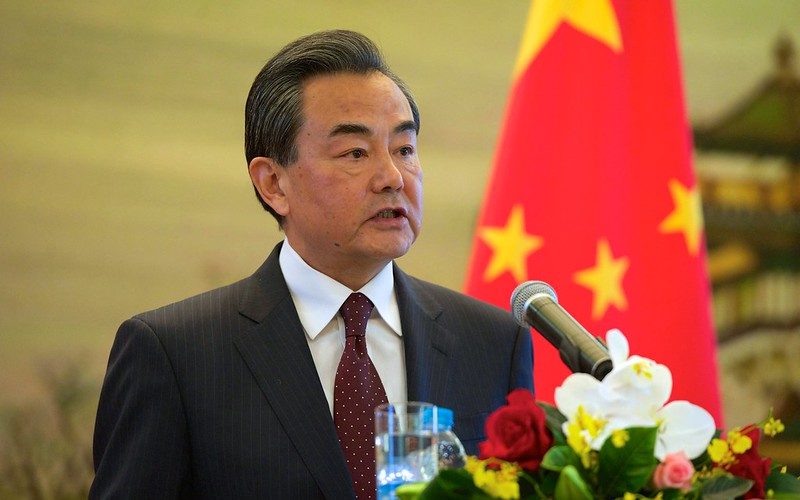
The power dynamics in the Middle East are evolving and a Saudi Arabia-Iran truce gives a glimpse of the bolstering ties between the Gulf states and China. As China is gaining ground speedily with a focus on making the Belt And Road Initiative (BRI) a success, while the role of the USA is declining in the region. With China’s flagship BRI projects, multilateral engagements have become a norm for the state. The Saudi-Iran deal brokered by China is another pearl in its ever-elongating chain of pearls. It is a success for China, Iran, and Saudi Arabia and a win for the region as a whole.
The long standoff between Iran and Saudi Arabia affected both states had many reasons and facets but most importantly, it involved supporting proxies against each other to harm their adversary. This led to deteriorating ties between the two and straining regional peace and stability. Both the states are key players in the region, therefore desensitizing the situation was a rational decision by the regime in Iran and Muhammad Bin Salman. In addition, the Peoples’ Republic of China emerged as a pivotal balancer in this truce. Chinese efforts to restore ties between the two states are due to the mutual interests of China and the states in the region and its significance for world politics cannot be downplayed. The deal between Saudi Arabia and Iran highlights a common ground settled by all states, namely to cooperate and resolve any dispute amicably. The motivation behind resuming diplomatic channels between Tehran and Riyadh is driven by several factors, including the desire to reduce regional tensions and enhance its security, as well as the recognition that Iran is a significant player in the Middle East that cannot be ignored. The agreement will lead to greater regional stability and cooperation in the Middle East. And it will enable a commitment to reduce tensions and conflict, as well as increase economic cooperation and investment.
China’s 25-year agreement with Iran was a pivotal strategic linkage to further strengthen ties in the region. A whopping $400 billion deal in 2021 was a key milestone in bolstering ties1. Another strategic partnership deal was also agreed upon during Xi Jinping’s official visit to Saudi Arabia in December 2022 as agreements worth approximately $29 billion were signed, thereby signifying the bolstering ties of the duo2.
Lessons To Learn For Rejuvenating Pakistani-Afghan Relationship
It may be difficult to draw parallels between Saudi-Iran and Pakistan-Afghanistan relations as these two scenarios have different respected contexts. However, a curcial lessons can be drawn from the Saudi-Iran deal, namely the importance of dialogue and diplomacy in resolving long-standing conflicts and reducing regional tensions. Ultimately, the success of any such efforts (in the Pakistan-Afghanistan scenario) will depend on a variety of factors, including the willingness of both respective sides to engage in constructive dialogue, the role of regional and international actors, and the overall political and security environment in the region. Regional peace in South Asia in Pakistan’s case would bring stability, a sense of security, and socioeconomic cooperation.
In order to improve Pakistani-Afghan relations by following a similar path to peace and cooperation as the Saudi-Iran truce, special emphasis needs to be paid to cross-border issues, terrorism, and smuggling, as well as increased economic cooperation and people-to-people contact. A major benefit is that both states do not have an active war to deal with. The situation is considerably peaceful with occasional incidents creating problems.
In the end, China could also play a role as a mediator in desensitizing the situation between Pakistan and Afghanistan as China has deep economic and strategic interests in the region of South Asia and beyond. But for that to happen, Pakistan must stabilize its deteriorating political environment, economic imbroglio, and crippling societal cohesion. Because, in the end, no state wants to indulge in investments or dialogue with a malfunctioning state.
Submit here
Sources Boot, Max. “As a Post-American Middle East Dawns, Iran and China Rush to Fill the Void.” Washington Post, May 8, 2023. https://www.washingtonpost.com/opinions/2023/05/08/united-states-influence-middle-east-iran-china/?utm_source=li&utm_medium=social_owned. Farouk, Yasmine. “Riyadh’s Motivations Behind the Saudi-Iran Deal.” Carnegie Endowment for International Peace, March 30, 2023. https://carnegieendowment.org/2023/03/30/riyadh-s-motivations-behind-saudi-iran-deal-pub-89421#:~:text=After%20seven%20years%20of%20military,signed%20in%201998%20and%202001. Golkar, Saeid, and Kasra Aarabi. “The Real Motivation Behind Iran’s China-Brokered Deal With Saudi Arabia.” Foreign Policy, April 28, 2023. https://foreignpolicy.com/2023/04/06/iran-saudi-arabia-deal-agreement-china-meeting-beijing/. Tehran Times. “Iran, Saudi Arabia Officially Mend Ties: Foreign Ministry,” April 7, 2023. https://www.tehrantimes.com/news/483440/Iran-Saudi-Arabia-officially-mend-ties-Foreign-Ministry#:~:text=Iran%20and%20Saudi%20Arabia%20reached,intense%20discussions%20held%20in%20China. Fassihi, Farnaz, and Steven Lee Myers. “China, With $400 Billion Iran Deal, Could Deepen Influence in Mideast.” The New York Times, March 29, 2021. https://www.nytimes.com/2021/03/27/world/middleeast/china-iran-deal.html. Jazeera, Al. “China’s Xi Arrives in Saudi Arabia to ‘Bolster Ties.’” Xi Jinping News | Al Jazeera, December 7, 2022. https://www.aljazeera.com/news/2022/12/6/chinas-xi-to-visit-saudi-arabia-from-wednesday. Wikipedia contributors. “Iran–China 25-Year Cooperation Program.” Wikipedia, January 29, 2023. https://en.wikipedia.org/wiki/Iran%E2%80%93China_25-year_Cooperation_Program#:~:text=Iran%2C%20P.R.%20China%20is%20a,yet%20to%20be%20officially%20announced.
Footnotes
- Wikipedia contributors, “Iran–China 25-Year Cooperation Program,” Wikipedia, January 29, 2023, https://en.wikipedia.org/wiki/Iran%E2%80%93China_25-year_Cooperation_Program#:~:text=Iran%2C%20P.R.%20China%20is%20a,yet%20to%20be%20officially%20announced. [>]
- Al Jazeera, “China’s Xi Arrives in Saudi Arabia to ‘Bolster Ties,’” Xi Jinping News | Al Jazeera, December 7, 2022, https://www.aljazeera.com/news/2022/12/6/chinas-xi-to-visit-saudi-arabia-from-wednesday. [>]





Be First to Comment