
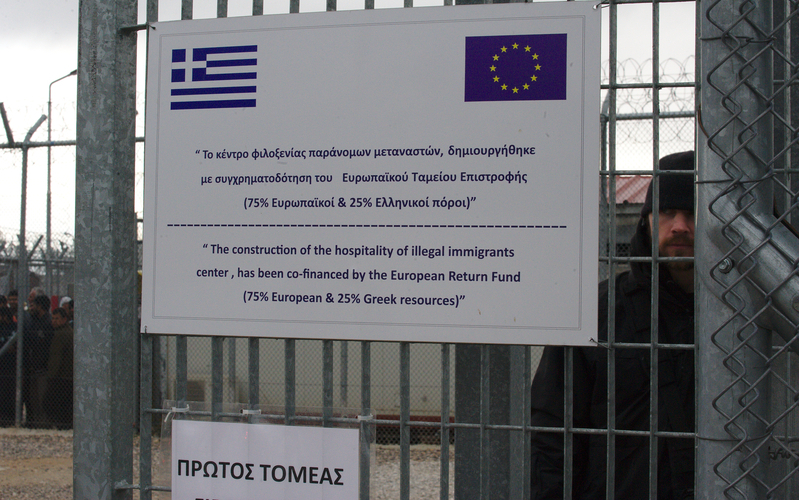
The origins of the EU-Turkey Deal
In 2015, the year marked as the year of the so-called “migration” or “refugee crisis”, a wave of migrants and refugees, primarily from the MENA region, came to Europe on unimaginable, dangerous routes, seeking a better life. The unprecedented number of asylum seekers forced the EU to finally step up its game as a global actor. Governments were forced to come up with solutions and address the issue in accordance with international partners and allies.
Overwhelmed by the situation and simultaneously facing a populist backlash from several EU countries against the admittance of asylum-seekers, the EU negotiated a deal with its immediate neighbour and primary transit country for migrants in 2015, Turkey. The deal came to be known officially as the EU-Turkey Statement. In short, the Agreement states that for every migrant that illegally arrives in Greece and is subsequently sent back to Turkey, the EU will resettle one Syrian refugee from Turkey in an EU member state. Moreover, the EU agreed to increase financial aid to Turkey up to €6 billion to handle the refugee crisis. The block would also grant Turkish citizens visa-free travel to the EU and accelerate Turkey’s application for EU membership.
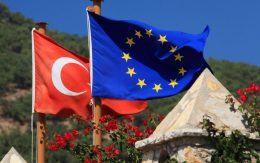
So far, despite curbing the numbers of people coming to the EU and seeking asylum, the deal remains a patch to an increasingly complex issue that needs to be addressed differently and, most of all, more efficiently. The deal does not offer a long-term, sustainable solution. Rather, the contrary: The Agreement is inadequate to address the situation. It further exacerbated the already precarious situation for refugees and arguably presented a violation of refugees and human rights. Here is how and why.
From a bilateral agreement to a human rights violation
Shortly after the EU finalised the deal with Turkey, Greece had to transform former reception centres for refugees on its the Aegean Islands into detention centres, so-called “hotspots”. There, the arriving migrants are being registered and assessed. However, they often have to wait for months, sometimes even years, until they receive a decision on whether they will be sent back to their home country or granted asylum in Europe. Moreover, the asylum seekers in these “hotspots” are not allowed to go to mainland Greece, resulting in overcrowded centres. An unbearable, inhumane situation, to say the least.
NGO Criticism of the “Hotspots”
Various NGOs have already criticised the situation in these centres on the islands. According to an extensive policy brief by the European University Institute on the EU-Turkey Agreement and the situation in the detention centres, the EU-Turkey deal and the situation resulting from it constitutes a severe violation of the refugees’ human rights.
The briefing explains that the EU-Turkey Agreement primarily emphasises the aspect of refugees’ return, even though those arriving on the island have a legal right to apply for asylum. Nevertheless, discriminations are made on the grounds of nationality. People from countries with low recognition rates have significantly lower chances of asylum compared to those from countries with high recognition rates (e.g. Syrians and Yemenis – see: European Asylum Support Officer, EASO).
Daunted by the poor living conditions in the camp and delays in the asylum procedures, refugees readily accept a return to Turkey, allegedly a “safe third country”. Sometimes, they even agree to go back to their home countries. Needless to say, after the implementation of the EU-Turkey deal, other more dangerous routes have been increasingly used. One example is the Libya-Italy route through the mediterranean sea – which lead to more deaths in the sea. These deaths can be directly attributed to the implementation of the EU-Turkey statement and the refugee smugglers’ route changes.
Apart from the above-stated violation of the refugees’ rights to access asylum, also other aspects arguably constitute violations in refugees’ and human rights. Most notably, several NGOs criticised the unsanitary conditions in the centres, which may cause the spread of various diseases and infections – which is exceptionally critical in times of pandemic diseases like COVID-19, which can make it spread like wildfires in such overcrowded, unsanitary conditions. Moreover, the lack of adequate food and also, as thoroughly elaborated on by the Women’s Refugee Commission (WRC), and the lack of safety for women and girls in the centres is alarming.
Overall, the situation in these camps remains precarious, endangers the health and safety of asylum seekers. It thereby violates basic human rights and does not live up to general European standards. Another major concern for various human rights organisations are the deteriorating mental health conditions of those detained in the camps due to the conditions in these centres, their uncertain status, and their previous traumatic experiences during the refuge from their home countries, which remain unaddressed.
Recent Development at the Greek-Turkish Border
After the repeated flare-up of immigration issues at the Turkish-Greek border in March 2020 and Turkey’s failings to hold on to the Agreement and keep the border closed, the New York Times reported about an extrajudicial centre on one of the Greek islands. According to the report, migrants are detained in a secret site, without due process, before they are expelled and brought back to Turkey. This way, the Greek authorities try to prevent repeating a similar scenario as in 2015. On 3rd March 2020, the Greek government passed an act to suspend acceptance of any further asylum applications for a month and to allow immediate deportations.
The report further states that migrants reported being captured, stripped off of their belongings, beaten and expelled from Greece. All, without having had the chance to talk to a lawyer and claim asylum. This treatment of migrants presents a severe violation of international law. Above all, it infringes upon their fundamental human rights, most notably their right to due process and asylum application.
After another outbreak of violence in Syria’s north-western province Idlib, the number of people seeking refuge rises again. Also, considering the recent tensions between Turkey and the EU, it remains to be seen whether the deal will hold at all and how the situation will deteriorate at Europe’s southern border and in the centres.
A weak actor? What the EU needs to do looking forward
Considering the arguments made above, the Agreement between the European Union and Turkey infringes on human rights on various levels. First and foremost, by putting arriving asylum seekers into so-called “hotspots” or detention centres. Secondly, by then denying them the fundamental right to seek refuge and due process to apply for asylum. Thirdly, by seriously endangering their mental and physical health on various levels. Most of all, due to the unsanitary conditions, the absence of protection of women and young girls in these centres, and the inadequate provision of basic physical and mental health care.
Howsoever the situation develops in the future, the EU has to find solutions for those detained in the camps. It needs to gather resources to improve the conditions in the centres. In addition, the procedures need to improve and pick up the pace. The EU will need to seriously rethink and reform the deal and its relationship with Turkey. Instead of negotiating another deal with unreliable partners such as Turkey, it should look for alternatives independent of third states.
The EU finally needs to step up its game as a global actor and speak up for the values it stands for and promotes, which also means advocating for the protection of the human rights of refugees.
Alpes, M., et al. (2017): Human Rights Violation by Design: EU-Turkey Statement Prioritises Returns from Greece Over Access to Asylum, Migration Policy Center, https://www.borderline-europe.de/sites/default/files/background/RSCAS_PB_2017_29_MPC.pdf, accessed, 12.06.2020
Asylum Information Database (AIDA): The European policy framework: “hotspots”, https://www.asylumineurope.org/reports/country/greece/asylum-procedure/access-procedure-and-registration/reception-and, accessed 14.06.2020
European Asylum Support Office https://easo.europa.eu/asylum-trends-annual-overview, accessed 14.06.2020
Reliefweb (2017): Greece: A Year of Suffering for Asylum Seekers, https://reliefweb.int/report/greece/greece-year-suffering-asylum-seekers, 14.06.2020
Stevis-Gridneff, M. et al. (2020): “We Are Like Animals”: Inside Greece’s Secret Side for Migrants, The New York Times, https://www.nytimes.com/2020/03/10/world/europe/greece-migrants-secret-site.html, accessed, 15.06.2020
Women’s Refugee Commission (2016): EU-Turkey Agreement failing refugee women and girls, https://www.womensrefugeecommission.org/images/zdocs/EU-Turkey-Refugee-Agreement-Failing.pdf, accessed 14.06.2020





Be First to Comment