
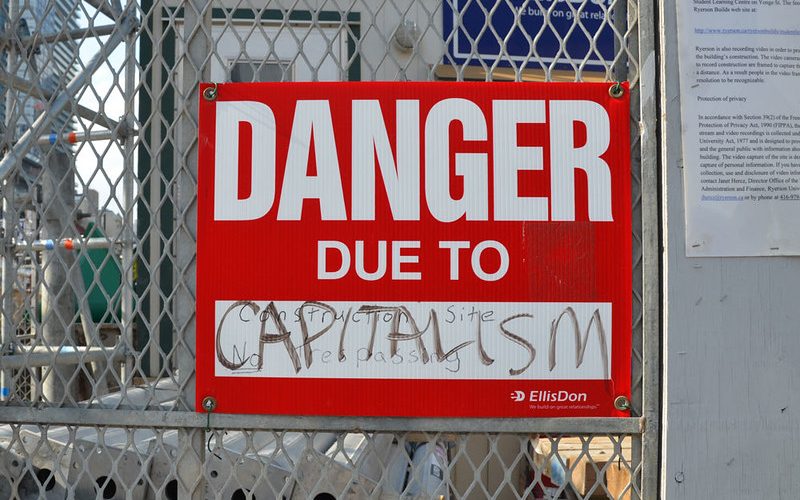
During the summer of 1989, Francis Fukuyama wrote an essay, published in the American magazine “The National Interest” where he declared the “End of History”. Since then, many have tried to interpret what he might have wanted to express. One way to interpret his saying is by examining the social and economic circumstances of the world at that time. In the summer of 1989, the “Cold War” had reached its end. The fall of the Soviet Union and its subordinate communist countries in Eastern Europe signaled the final victory of Capitalism over Communism.
Three years later, Fukuyama wrote a book about it, explaining what he meant. He believed that the end of the “Cold War” meant the end of the fight between ideologies and that the big winners were capitalism and liberal democracy. He also stated that he was sure that there were going to be societies that would choose a different path but without a doubt, the best possible solution for the well-being of people would be capitalism and liberal democracy.
This end of history and the declaration of capitalism and liberal democracy as the winners of competing systems, resulting end of ideological fights, was believed to favor people’s well-being. With the fall of socialism, a new system has risen. Neo-liberalism, which was introduced some decades back, overthrew liberalism and conquered the world. Liberty, equality, and fraternity were replaced by profit margins. Capitalism and neo-liberalism were relatively new and people were completely unaware or uninterested in its future consequences. They wanted to escape the authoritarian regimes of communism and welcomed neo-liberalism.
Many have underestimated or overlooked the periodical crisis that capitalism and neo-liberalism generated in order to survive, evolve, and expand. Among the consequences of these crises were the rise of fundamentalism in the Middle East, increasing terroristic actions, the U.S. campaigns in the Middle East, the economic crash of 2008, and the widening gap between the wealthy and the poor people of the world.
The endurance of the system walks on thin ice. After almost ten years of austerity, people hoped for a turn towards growth and development. 2019 seemed the start of a turning point. Especially the countries of southern Europe started to experience a ray of hope. But then something unexpected happened: A pandemic surfaced, the first since the Spanish Flu back in the 1930s, and it challenged the capabilities of the system to retaliate.

Western Europe and the U.S., the founding fathers of capitalism and liberal and neo-liberal democracy, are facing a danger that can decide the future of the end of history. After 10 years of austerity, a new challenge is rising. The health crisis leads neo-liberal democracy to a crossroad, that has two paths. The first path follows the high ideals of liberty, equality, and fraternity which constitute liberal democracy across the world. This means small or no profit margins at all but the maintenance of people’s standard of living at a satisfying level. The second path follows the laws of the free market which is promoted by capitalism and neo-liberalism, and the choice is between people and profit margins. So far, governments across the world have chosen the second path. To follow this path, people may have to undergo yet another financial crash in order for capitalism to survive.
If governments stick to choosing the second path, people will start revising the alleged “end of history”. The results of this revision are of a wide range. Racism, xenophobia, nationalism, socialism, anarchism, military coups, a new “Cold War” or even a third World War may resurface.
It is the start of another “end of history”.


Be First to Comment