
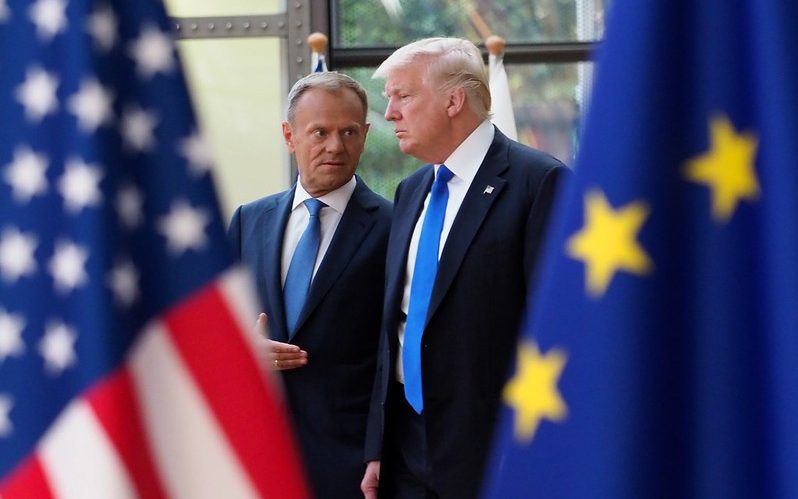
EU-Transatlantic relations are at a crossroads. In fact, they have been there time and again in the past four years. And yet, here we are again.
The EU-Transatlantic partnership could build serious momentum in 2020. The upcoming US presidential elections could once again change the course of US foreign policy and set a different direction for future EU-US relations. Or it could lead to an even deeper divide between these two former partners.
Over the past four years, during Donald Trump’s presidency, the decade-old EU-Transatlantic relationship suffered serious setbacks. New, seemingly insurmountable discrepancies between the two global powers emerged.
While EU institutions and the majority of EU governments continued to advocate for liberal democracy, protection of human rights and the rule of law, on the other side of the Atlantic, it seemed that the White House had already written off these values. Instead, nationalism, populism and attack against global institutions are currently “en vogue”.
The Trump Administration set an unprecedented example of how a global power can retreat from multilateralism, praise other leaders who rule with autocratic tendencies while discrediting and raging against the left.
He praised the United Kingdom’s exit from the European Union and the work of Hungarian Prime Minister Orbán, who received criticism from various EU leaders for his illiberal, authoritarian way of governing. Trump also pledged to build a border wall and attracted attention for his cruel, inhumane immigration policies – which arguably violate asylum rights. In addition, he criticized NATO, calling it obsolete and questioned whether the EU lives up to its financial obligations to NATO.
If anything, the past four years made it clear that the EU needs to be more self-reliant. With an unreliable partner to the west and an adversary to the east, it became obvious that, in the future, the EU has to act more independently. Also, in terms of military defence. Especially in times of Russian aggression, threats of cyberwar, and hybrid warfare, it is paramount that the block develops the necessary capabilities to defend itself – autonomously.
Moreover, the EU needs to continue upholding and securing basic democratic principles and liberal values – in the EU as well as beyond its own borders. It has to step in to lead as an example when other actors, such as the current Trump administration, obviously cannot.
Whether Biden will be able to secure enough votes to replace Trump in the White House remains questionable. If so, it is still written in the stars whether the Transatlantic partnership can be revived.
If Trump wins the elections in November and stays for another four-year long term, the outlook is rather dark. And not only for the already negatively affected EU-Transatlantic partnership. Also, the prospect for liberal values, the rule of law, and democratic principles is quite sobering.
Four years ago, the EU-US relationship stood at a crossroads. Now, it finds itself in the same state again. So the question remains whether there will be a change for the better. Or if we continue spiralling down the rabbit hole, as we did for the past four years.





Be First to Comment