
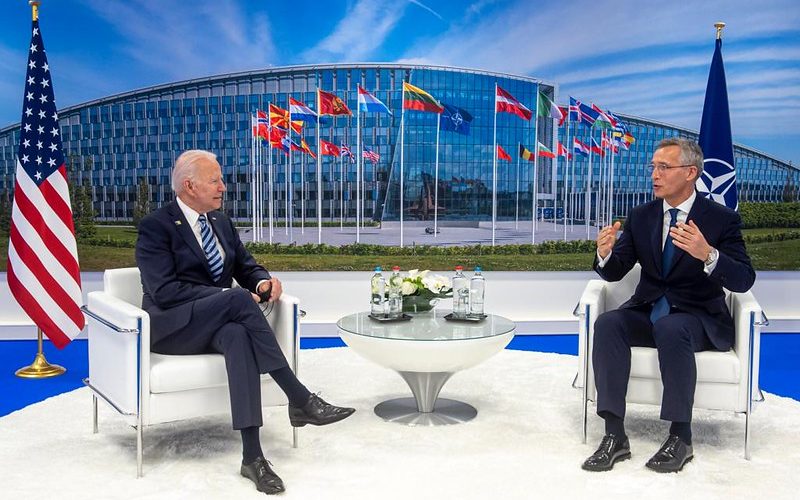
China’s growing maritime and military assertiveness increasingly threatens American primacy and the stability of the rules-based democratic order in the Indo-Pacific region. The mapping of this region should be understood as an interconnected space between the Indian and Pacific Oceans. At the height of American pre-eminence in the Indo-Pacific, the maritime region experienced rapid economic growth and democratic outreach. The current backdrop, however, is characterised by the Chinese Communist Party’s ambition to power-project its military capabilities and extend the characteristics of its authoritarian system to neighbouring states at the crossroads between autocracy and democracy. It also seeks to advance its economic and diplomatic relations by spending billions on hard infrastructure projects in the countries of the South China Sea and the Indian Ocean, in order to advance China’s grand geopolitical project: the Belt and Road land and sea initiative.
In response to China’s rise, US statecraft has sought to reassure the region’s democracies through a mix of diplomatic, economic and military measures. Unfortunately, both the Obama and Trump administrations have failed to effectively contain Beijing’s growing military, economic and diplomatic reach. With the withdrawal of US troops from Afghanistan in September, Joe Biden has a unique opportunity to confront China’s growing geostrategic influence by working with liberal democratic allies in the Indo-Pacific and NATO. Yet, over the past decade, Beijing has deepened its trade and investment ties, especially with North Atlantic Alliance allies, meaning that NATO members are not united on China.
The case of France and Britain
European involvement in the Indo-Pacific has traditionally been analysed through the strategic reach of Europe’s two largest military powers: France and the United Kingdom. Over the past decade, the two permanent members of the United Nations Security Council have deepened their security and defence cooperation with powers in the region. Both London and Paris have deep historical ties in the Indo-Pacific region and share an understanding of the importance of protecting the free flow of international trade.
Although the UK has limited territorial presence in the Indo-Pacific, it continues to harbour deep historical ties with the former British Empire territories integrated into the Commonwealth of Nations. To this end, London has deepened its bilateral military defence relationship with Canberra, notably by signing a Defence and Security Cooperation Treaty in 2013 – the first ever comprehensive defence cooperation framework between the two nations. This was subsequently strengthened, with the UK and Australia increasing their defence interoperability objectives and harmonisation of defence aviation activities through the Air Cooperation Framework. With the UK’s 2021 Integrated Foreign and Defence Policy Review reinforcing London’s geostrategic focus on the Indo-Pacific, Downing Street has strengthened the UK’s maritime cooperation, particularly with India in the Indian Ocean.
In the case of Paris, it has also deepened its relations with Canberra and Delhi in recent years. Both Australia and India have significantly stepped up their diplomacy to court France’s naval and air capabilities. Both François Hollande and Emmanuel Macron were the first French officials to make state visits to Australia, thereby expressing their commitment to work alongside like-minded nations in the region to preserve maritime security and the territorial integrity of France’s Indian and Pacific territories – home to more than one million people.
Amidst growing strategic instability in the region, Franco-Australian relations, in particular, have reached new heights during President Macron’s tenure. During the French president’s 2018 trip to Australia, the two countries’ defence ministers signed a Mutual Logistics Support Agreement, which has subsequently enhanced the interoperability of the two defence forces. With regard to India, France has deepened its strategic relationship with Delhi by engaging in joint naval cooperation and joint intelligence sharing in the Western Indian Ocean – home to the French territories of Mayotte and Réunion. On the trilateral front, dialogue has intensified between Paris, Delhi and Canberra with the aim of strengthening trilateral security cooperation, particularly in the maritime domain between the three capitals.
The hesitant bloc
The perception of the Chinese threat varies, however, among Washington’s other closest NATO allies. This is particularly true of Germany, whose industries are heavily dependent on the Chinese market – Mercedes-Benz, for example, sold three times as many cars in China last year as in the United States. It is therefore not surprising that Angela Merkel played a central role in securing an EU investment protection agreement with China, despite opposition from the incoming Biden administration. Her position was subsequently reiterated at the annual World Economic Forum, where she urged Europeans to avoid entering into a strategic stand-off between Washington and Beijing. Not surprisingly, the forthcoming deployment of the Bayern frigate to the Pacific seeks to avoid upsetting Beijing’s strategic interests by not coming within 12 nautical miles of territory claimed by the CCP. This has inevitably prevented the trilateral collaboration of the British HMS Queen Elizabeth II and the French Mistral Tonnerre class amphibious assault ship, which are due to dispatch at the same time.
The frontrunner of the Christian Democratic Union party – Armin Laschet – in the September German federal elections has also aligned his foreign policy vision on China with that of outgoing Chancellor Merkel. The Minister-President of North Rhine-Westphalia has in the past called for a balanced policy of economic cooperation with the CCP. This will inevitably complicate the White House’s efforts to align a key NATO ally against China’s strategic behaviour in the Indo-Pacific.
This backdrop is further exacerbated by the close ties Beijing has forged in recent years in Southeast Europe and Turkey. It has taken advantage of the strategic ambivalence of Western capitals that has spread since the 2008 Global Financial Crisis by strategically investing in key sectors of the region. China considers the Balkan Peninsula and Turkey to be of particular strategic importance to its Belt and Road Initiative. Greece and Turkey have considerable weight in this project: China has a 65% stake in the Kumport terminal on the Marmara Sea and full ownership of the Greek port of Piraeus. The two Mediterranean terminals are strategically linked to deepen Beijing’s trade and investments in Europe. The CCP has also seized opportunities to strategically invest in Northern Macedonia, Albania and Montenegro, creating industrial zones and building railways and roads. It has also strengthened its economic foothold on the Adriatic coast by investing heavily in Albanian and Montenegrin ports. Beijing’s deep regional presence thus makes it considerably difficult for these NATO allies to raise their foreign policy stance against China.
Where to next?
The geopolitical conjuncture has shifted considerably from the height of US global dominance. In the current context, US economic and geostrategic unipolarity is increasingly challenged by China. In this light, President Biden has recently sought to engage in an open dialogue with Vladimir Putin with the aim of restoring strategic stability to their relationship, given the recent unprecedented tensions in relations over Ukraine, Belarus and Alexei Navalny. Mr. Biden is clearly concerned that continued hostile tensions in the US-Russia relationship could prompt the Kremlin to further develop its coordination activities with China. While the recent Biden-Putin summit was not a reset of relations – pausing the US confrontation with Russia will allow the Biden administration to focus on the greater challenge of China’s rise.
Looking ahead, Mr. Biden will nevertheless need to develop a shared NATO policy on the systematic challenges posed by China. Yet, given Beijing’s economic foothold among NATO allies, it is unclear whether the US will succeed in this endeavour. The Biden administration will therefore need to take a more forward-looking approach, focusing on building new multilateral forums and links between European and Indo-Pacific allies, to foster greater strategic cooperation among allies.
Sources Bradsher, K & Ewing, J. (2021). “How Close Are China and Germany? Consider ‘Little Swabia”?, The New York Times, March 19, 2021. Burchard, H. (2020). ‘Merkel pushes EU-China investment deal over the finish line despite criticism’, Politico, December 29, 2020. Cai, P. (2017). ‘Understanding China’s Belt and Road Initiative’, Lowy Institute, Sydney: Australia. Chaudhury, R.R. (2021). ‘India deepens defence ties with UK, firms security links with the EU’, The International Institute for Strategic Studies, London: United Kingdom. Kastner, J & Seferiadis, G. (2020). ‘COSCO faces backlash as it moves to tighten grip on Greek port’, Nikkei Asia, December 29, 2020. Kundnani, H &Tsuruoka, M. (2021). ‘Germany’s Indo-Pacific frigate may send unclear message’, Chatham House, London: United Kingdom. Lau, S & Gehrke, S. (2021). ‘Merkel sides with Xi on avoiding Cold War blocs’, Politico, January 26, 2021. Lerner, J.M. (2020). ‘China to the Rescue in Turkey?’, The Diplomat, July 3, 2020. Pancevski, B. (2021). ‘Even Under New Leadership, Germany Won’t Confront China’, The Wall Street Journal, January 15, 2021. Rajagopalan, R.P. (2020). ‘Rise of the Minilaterals: Examining the India-France-Australia Trilateral’, The Diplomat, September 17, 2020. Rajagopalan, R.P. (2021). ‘India-France Naval Exercise: Growing Strategic Synergy’, The Diplomat, May 13, 2021. Shoebridge, M. (2021). ‘Biden’s plan: out of Afghanistan, into the Indo-Pacific’, Australian Strategic Policy Institute, Canberra: Australia. Shopov, V. (2021). ‘Decade of patience: How China became a power in the Western Balkans’, European Council on Foreign Relations, London: United Kingdom. Watanabe, S. (2019). ‘China’s Infrastructure Development in the Indo-Pacific Region: Challenges and Opportunities’, Centre for Strategic and International Studies, Washington DC: United States.




Be First to Comment