
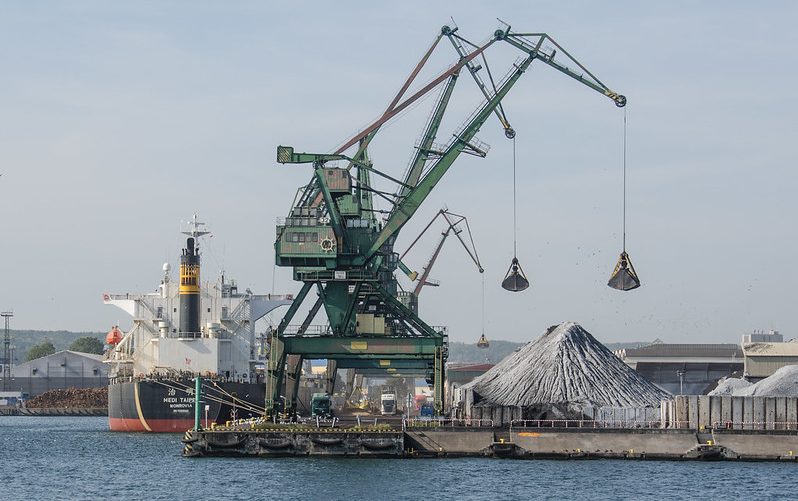
According to Daniela Szymanska, a professor of Urban Studies at Nicolaus Copernicus University, the process of development happens on two scales: the horizontal and the vertical one. The former is quantitative, bounded by certain limits and includes factors such as the rise in population of a certain city. The latter is unbounded, infinitely complex and includes factors such as diversification of human activity, which, for example, contributes to the creation of increasingly more intelligent structures, such as cities, technology or education (Szymanska, 2015). Based on the recent developments in Poland’s coal crisis, it can be clearly seen that this vertical development in Poland is kept only in the hands of the few: mainly politically affiliated players, which is becoming increasingly problematic and ineffective.
The coal crisis in Poland revolves around the fact that until 2050 Poland, which is currently heavily dependent on coal as a predominant energy source, will have to step away from this fossil fuel and find new alternatives. This is due to many factors, some of them including environmental concerns, EU carbon emission limits or depleting stock (wysokienapiecie.pl, 2021). It can be argued that Poland’s current coal-based energy crisis stems from the lack of resilient and adaptive infrastructure (Mazurek, 2021). However, this in itself is a result of governmental incapability to create a system, where solutions are found in the most effective way. While for years, this procrastination to make viable decisions was somehow possible, today the repercussions of the governments tactic of ‘playing for time’ have immediate effects in Turow, where Poland was requested by the CJEU (Court of Justice of the European Union) to immediately halt brown coal mining in this region, after Czechia has issued a complaint that Polish excavations have severely affected the groundwater situation in their country (Madejski, 2021). This decision may have an effect on 10% of Poland’s domestic energy production and is fatal for hundreds of jobs and families. Although prime minister Mateusz Morawiecki claims that this disagreement ‘is on the way of being solved’ through Poland committing to invest in projects beneficial for both countries (Izdebska-Białka, 2021), which in itself has an undertone of bribery, the situation in Turow could become a pilot for many more to come and thus it is an important wake-up call and a reminder that this problem will not disappear.
Poland’s coal crisis can be used as an interesting ground to argue for the need of a more de-centralized solution finding system. Currently, most decisions that translate into policies are very elitist and are taken behind closed doors by those who may or may not have their own economic or personal agendas. This leads to a ‘reacting to failures rather than anticipating dangers’ type of situation (Assen, 2017). Broadening the basis for development through combining the knowledge and expertise of a wider range of people could reverse this scenario and result in better, faster and more sustainable solutions.
Although there are certain attempts to implement this idea, which include Think Tanks or Living Labs, these efforts are still lacking the capability to include the suggestions of the civil society as a whole as they are accessible only to a limited amount of experts, who ‘seem to be rarely equipped to engage with the general public’ (Mendizabal, 2019). Additionally, as mentioned by Boyd Cohen, an urban strategist, true democratic involvement would only be possible when appropriate resources such as access to knowledge, freedom of speech or democratic awareness are given to members of the society (Maxwell, 2019) – which is currently lacking in Poland.
It will not be an easy task to create a truly participatory and inclusive system, where members of the society become not only recipients but also take an active role in decision-making processes. However, considering our increasingly complex and rapidly approaching energy crisis, it might be the only option.
Sources Assen, S., 2017. Urban challenges, resilient solutions : design thinking for the future of urban regions. Trancity Valiz. Izdebska-Białka, K., 2021. Kopalnia Turów. Morawiecki: Mamy w zasięgu ręki polubowne zakończenie sporu. [online] www.money.pl. Available at: <https://www.money.pl/gospodarka/kopalnia-turow-morawiecki-mamy-w-zasiegu-reki-polubowne-zakonczenie-sporu-6643586584599520a.html> [Accessed 26 May 2021]. Madejski, M., 2021. Kopalnia Turów do zamknięcia. “Gigantyczny problem dla Polski”. [online] www.money.pl. Available at: <https://www.money.pl/gospodarka/kopalnia-turow-do-zamkniecia-gigantyczny-problem-dla-polski-6642061962635808a.html> [Accessed 24 May 2021]. Maxwell, L., 2019. Boyd Cohen on the Future of Smart Cities: Sustainability, Technology & Citizen-Centricity. [online] Hub.beesmart.city. Available at: <https://hub.beesmart.city/en/strategy/smart-city-leaders/boyd-cohen-interview-future-of-smart-cities> [Accessed 24 May 2021]. Mazurek, R., 2021. Paweł Zalewski: Działanie Białorusi to akt państwowego terroryzmu. [online] Rmf24.pl. Available at: <https://www.rmf24.pl/tylko-w-rmf24/poranna-rozmowa/news-pawel-zalewski-dzialanie-bialorusi-to-akt-panstwowego-terror,nId,5250469#crp_state=1> [Accessed 24 May 2021]. Mendizabal, E., 2019. On public engagement. [online] Onthinktanks.org. Available at: <https://onthinktanks.org/articles/on-public-engagement/> [Accessed 24 May 2021]. Szymańska, D. and Korolko, M., 2015. Inteligentne miasta. Toruń: Wydawnictwo Naukowe Uniwersytetu Mikołaja Kopernika. wysokienapiecie.pl, 2021. Wydobycie węgla w Polsce bliżej końca niż mówią politycy – WysokieNapiecie.pl. [online] WysokieNapiecie.pl. Available at: <https://wysokienapiecie.pl/27254-wydobycie-wegla-w-polsce-blizej-konca-niz-mowia-politycy/> [Accessed 24 May 2021].



Be First to Comment